
In short: L.A. Noire was a 1940s detective game made in Sydney by Team Bondi over seven years and published by Rockstar Games in May 2011. Its MotionScan facial capture used 32 cameras. The L.A. Noire storyboards for its in-game cinematics were drawn by Tui Studios, and ten of them, shown online in 2009, were among the first images the public saw.
Few Australian games have been as ambitious as L.A. Noire, or as troubled. It took a Sydney studio seven years, passed from one publisher to another, introduced a new way to capture actors’ faces and shipped millions of copies, and the studio that made it was in liquidation within five months. This article covers how Team Bondi made the game, what MotionScan was, and the small part the Sydney animation studio Tui Studios played in planning its cinematic scenes.
Three terms recur. Team Bondi was the Sydney game developer founded to make L.A. Noire. MotionScan was a facial performance capture system built by its sister company, Depth Analysis. In-game cinematics, or cutscenes, are the non-playable film-like scenes that carry a game’s story, and storyboards are the drawings used to plan them shot by shot.
What was Team Bondi?
Team Bondi was founded in mid-2003 by Brendan McNamara, formerly of Sony’s London studio Team Soho, according to Wikipedia’s Team Bondi article. The studio’s opening was announced in January 2004, with an exclusive publishing deal with Sony Computer Entertainment Australia. L.A. Noire, announced in July 2005, was its first and only title.
IGN’s 2011 investigation describes how the team grew. The first five Australian hires started in March 2004, and the studio reached about 30 people within its first year. One of those original five said there were a little over 100 people working there when they left.

Seven years in development
The project was large from the start. According to IGN, it set out to recreate Los Angeles in 1947, across a vast city, with cases that changed according to players’ choices, and with motion-capture technology that had not been used in a game before. Former staff said tools for building the world did not work well at first, and that the PlayStation 3 did not exist when development began, so early assumptions had to change.
The publisher changed too. IGN reports that Sony dropped the project in 2005, when it exceeded Sony Computer Entertainment America’s expected price, and that Rockstar Games picked it up in spring 2006. Wikipedia’s L.A. Noire article says publishing rights passed to Rockstar by September 2006 and that analyst estimates put the combined development and marketing budget at more than US$50 million.

How MotionScan worked
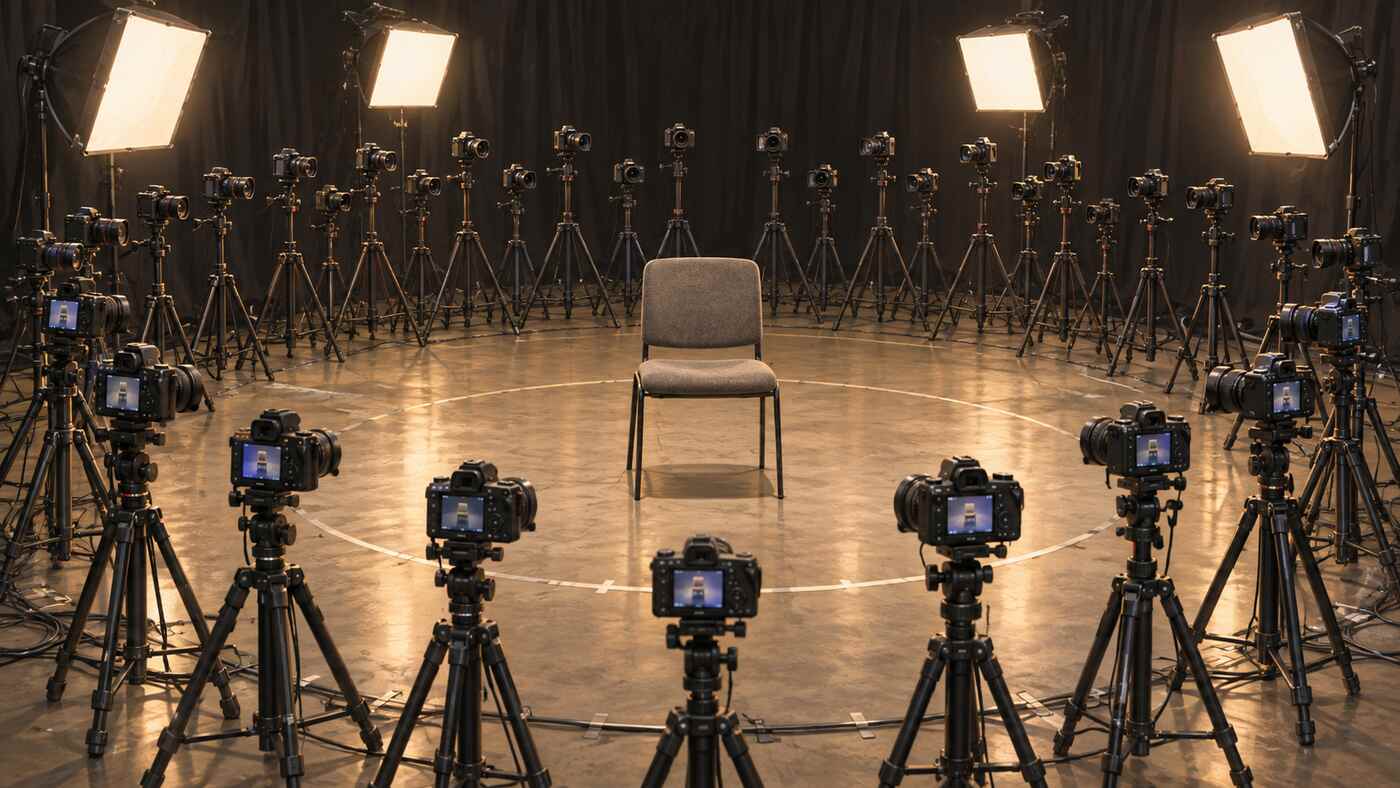
The game’s signature feature was its faces. McNamara led the founding of Depth Analysis, a sister company to Team Bondi, which developed MotionScan. According to Wikipedia, the system recorded actors at 1,000 frames per second with 32 cameras arranged around them, capturing facial expressions from every angle. That detail made the interrogation mechanic possible: players had to read a suspect’s face to judge whether they were lying.
The game’s staff credits, reproduced in an IGN guide credits listing, include a separate section for “Depth Analysis – Motionscan” alongside outside animation support companies.
The L.A. Noire storyboards by Tui Studios
Before the faces were captured, the scenes had to be planned. The archived Tui Studios storyboards page lists “L.A. Noire, Client: Team Bondi, Description: Storyboards for in-game cinematics”. The same credits listing that names Depth Analysis has a line reading “Storyboard by Tui Studios”.
The boards became news in August 2009. VG247 ran the story under the headline “LA Noire storyboards are leaked”, reporting that Tui Studios had put ten storyboards from Team Bondi’s game on its website, in the Storyboards section. Engadget followed, noting that it had been “a good long time” since there had been news of the game, and that while the images did not give away the plot, “the stylish depiction of a bleak 1950s Los Angeles is enough to pique our interest”. The game itself was set in 1947; Engadget’s “1950s” was its own description.
Both outlets used the word “leaked”, but the boards sat in the studio’s public portfolio. We have found no statement from Team Bondi or Rockstar about them. How storyboards fit into the wider planning of a game or film is covered in our guide What is a storyboard?

Release and reception
Rockstar released L.A. Noire for PlayStation 3 and Xbox 360 on 17 May 2011 in North America and 20 May in PAL regions, according to Wikipedia. A Windows version followed in November 2011 and enhanced versions for Nintendo Switch, PlayStation 4 and Xbox One in November 2017.
L.A. Noire sales and the Tribeca selection
| Measure | Figure |
|---|---|
| Shipped in first month | 4 million units |
| US sales, May 2011 (PS3 and Xbox 360) | 899,000 copies |
| Copies by December 2011 | Nearly 5 million |
| Copies by September 2017 | About 7.5 million |
| People in Windows credits (MobyGames) | 1,418 |
In April 2011 it became the first video game to be an official selection at the Tribeca Film Festival, according to Wikipedia. The MobyGames credits for the Complete Edition list Brendan McNamara as writer and director.
Why did Team Bondi close?
Success did not save the studio. In June 2011 IGN published accounts from eleven anonymous former employees about management, staff turnover and long working hours. The International Game Developers Association announced it would look into the claims; its chairman said that “12-hour a day, lengthy crunch time, if true, are absolutely unacceptable”. According to Wikipedia, Rockstar parted ways with Team Bondi after the release.
On 9 August 2011 the film company Kennedy Miller Mitchell announced it had acquired Team Bondi’s assets and the rights to McNamara’s next game. Team Bondi, then with 35 employees, entered administration on 31 August 2011 and liquidation on 5 October 2011. In May 2013, Engadget reported that veterans of L.A. Noire and its planned successor, Whore of the Orient, had formed Intuitive Game Studios. For how Australian game development changed in the same years, read our history of Australian indie game development.
Key takeaways
- Team Bondi, founded in Sydney in 2003, spent seven years making L.A. Noire.
- Sony dropped the project in 2005; Rockstar Games published it in May 2011.
- MotionScan, by sister company Depth Analysis, captured faces with 32 cameras at 1,000 frames per second.
- Tui Studios drew the L.A. Noire storyboards for in-game cinematics; ten were reported by VG247 in 2009.
- Team Bondi entered administration in August 2011 and liquidation that October.
Common questions
Who drew the L.A. Noire storyboards?
Tui Studios, a Sydney animation studio, drew storyboards for the game’s in-game cinematics for Team Bondi. Its portfolio listed the work, the game’s staff credits include “Storyboard by Tui Studios”, and VG247 and Engadget reported ten of the boards in August 2009.
Was L.A. Noire made in Australia?
Yes. Team Bondi, the developer, was based in Sydney and was founded there in 2003 by Brendan McNamara. Rockstar Games published the game, and Wikipedia notes that several Rockstar studios assisted with development.
Why did L.A. Noire take seven years?
Former staff told IGN that the game’s scale, new technology, tools that did not work well early on, a change of publisher from Sony to Rockstar and high staff turnover all slowed the work. McNamara himself described the middle of development as “torture”.
What is MotionScan?
A facial capture system developed by Depth Analysis, Team Bondi’s sister company. It recorded actors at 1,000 frames per second using 32 cameras arranged around them, so the game could reproduce their facial performances closely enough for players to judge whether suspects were lying.
How we put this together: development history comes from IGN’s 2011 investigation and Wikipedia’s articles on L.A. Noire and Team Bondi; credits come from MobyGames and an IGN guide credits listing; the storyboard story comes from VG247, Engadget and the Wayback Machine copy of Tui Studios’ portfolio. Sales figures are as reported in those sources.
Sources
- Wikipedia: L.A. Noire
- Wikipedia: Team Bondi
- IGN: Why did L.A. Noire take seven years to make?, 2011
- VG247: LA Noire storyboards are leaked, 2009
- Engadget: Ten L.A. Noire storyboards leaked online, 2009
- MobyGames: L.A. Noire: The Complete Edition credits
- L.A. Noire staff credits (IGN guide PDF)
- Wayback Machine: Tui Studios storyboards portfolio
- Engadget: L.A. Noire veterans form Intuitive Game Studios, 2013