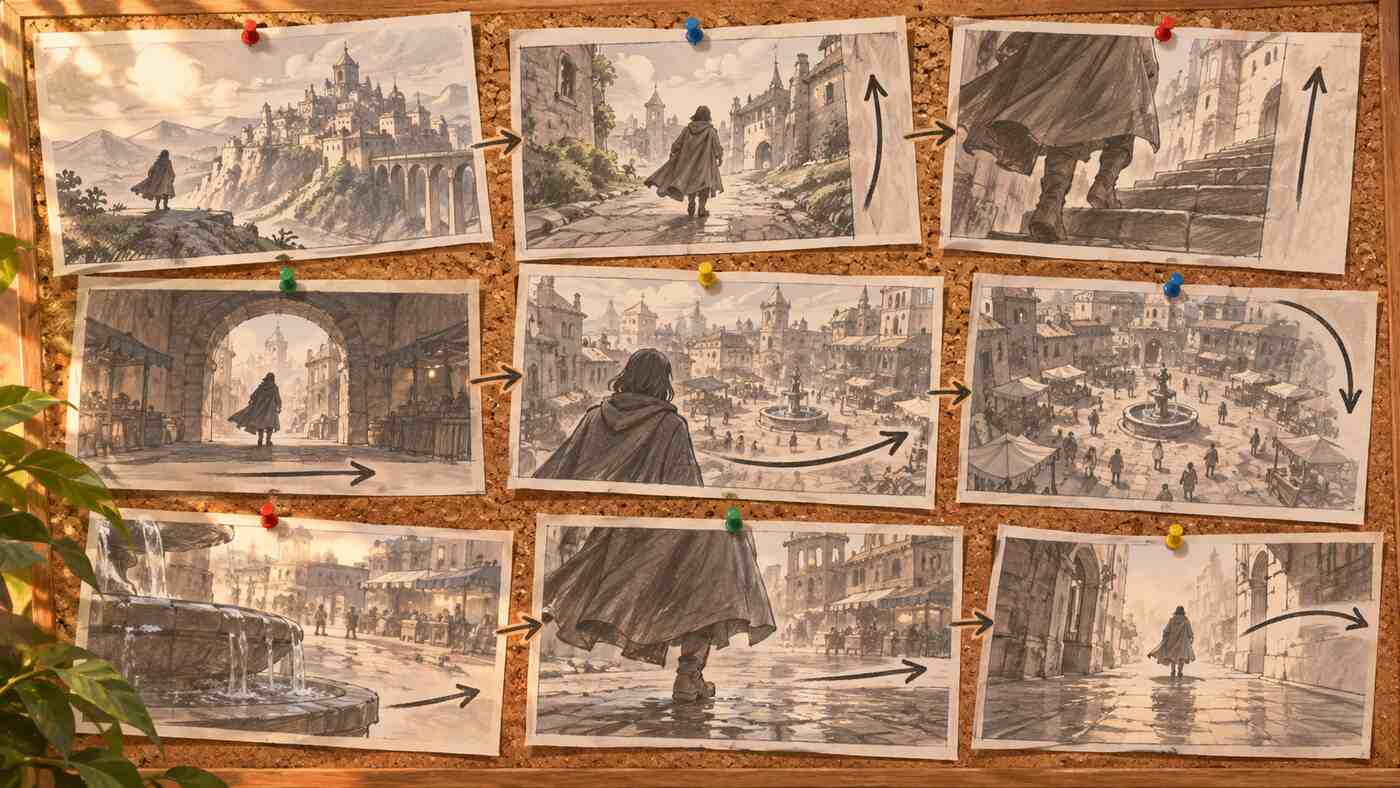
In short: A storyboard is a sequence of drawings that shows how a film, animation, advert or game scene will play out, shot by shot, before it is made. An animatic times those drawings to sound, and previs extends the planning into rough 3D. The method took shape at Walt Disney’s studio in the early 1930s. Storyboards were a core service of Sydney’s Tui Studios, which boarded scenes for L.A. Noire, game trailers, adverts and a feature film.
Almost every animated film, television advert and game cinematic starts as a set of small drawings. Those drawings are the cheapest place to make mistakes. This guide explains what a storyboard is, where the idea came from, how it grew into animatics and previs, and how one Sydney studio, Tui Studios, used storyboards in its work for game, film and advertising clients.
What is a storyboard?
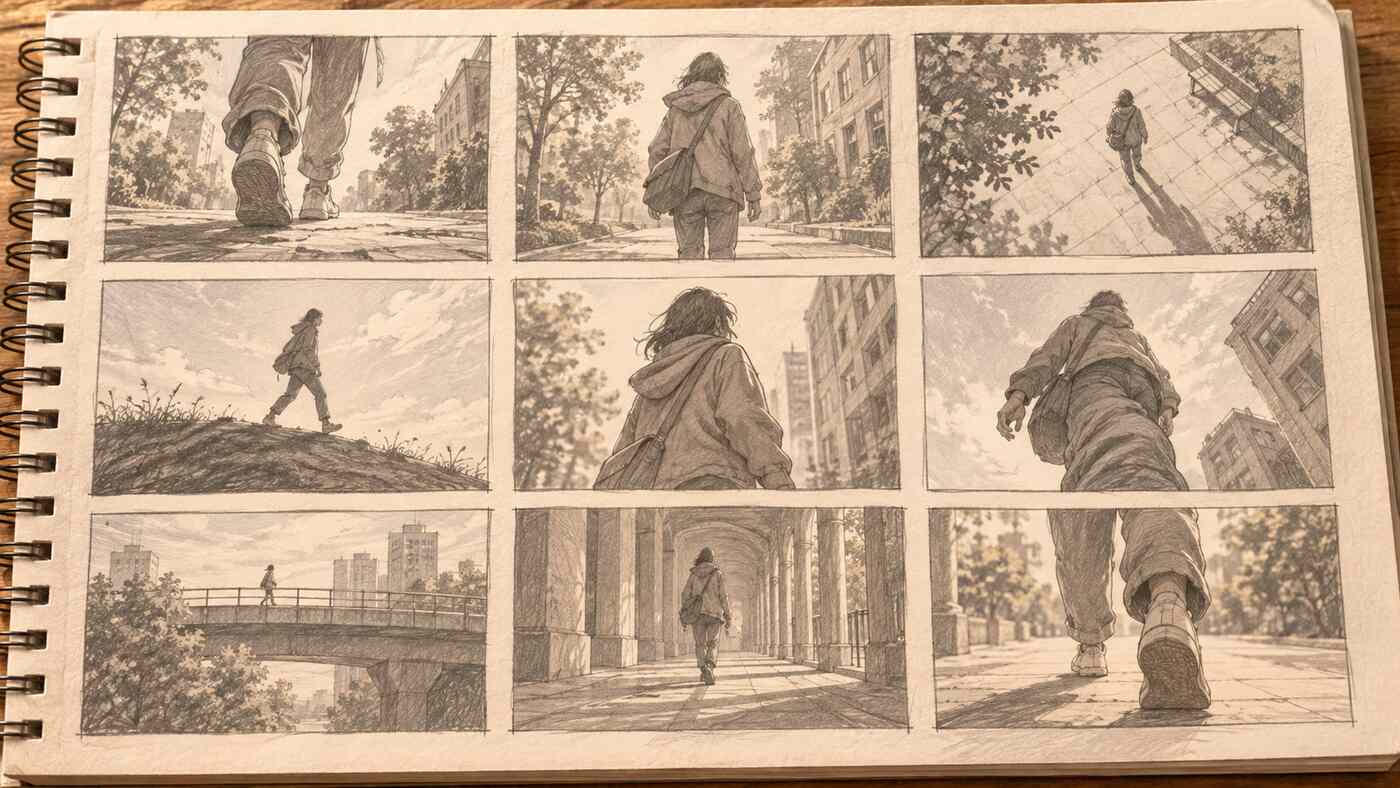
Wikipedia defines a storyboard as a graphic organizer of illustrations or images displayed in sequence for the purpose of pre-visualizing a motion picture, animation, motion graphic or interactive media sequence. Put simply, it is a comic strip of the film before the film exists. Each panel shows one shot: what the camera sees, where the characters stand, and often notes about movement, dialogue and sound.
Three related terms come up often:
- Thumbnails are quick, small sketches used to try out ideas before clean panels are drawn.
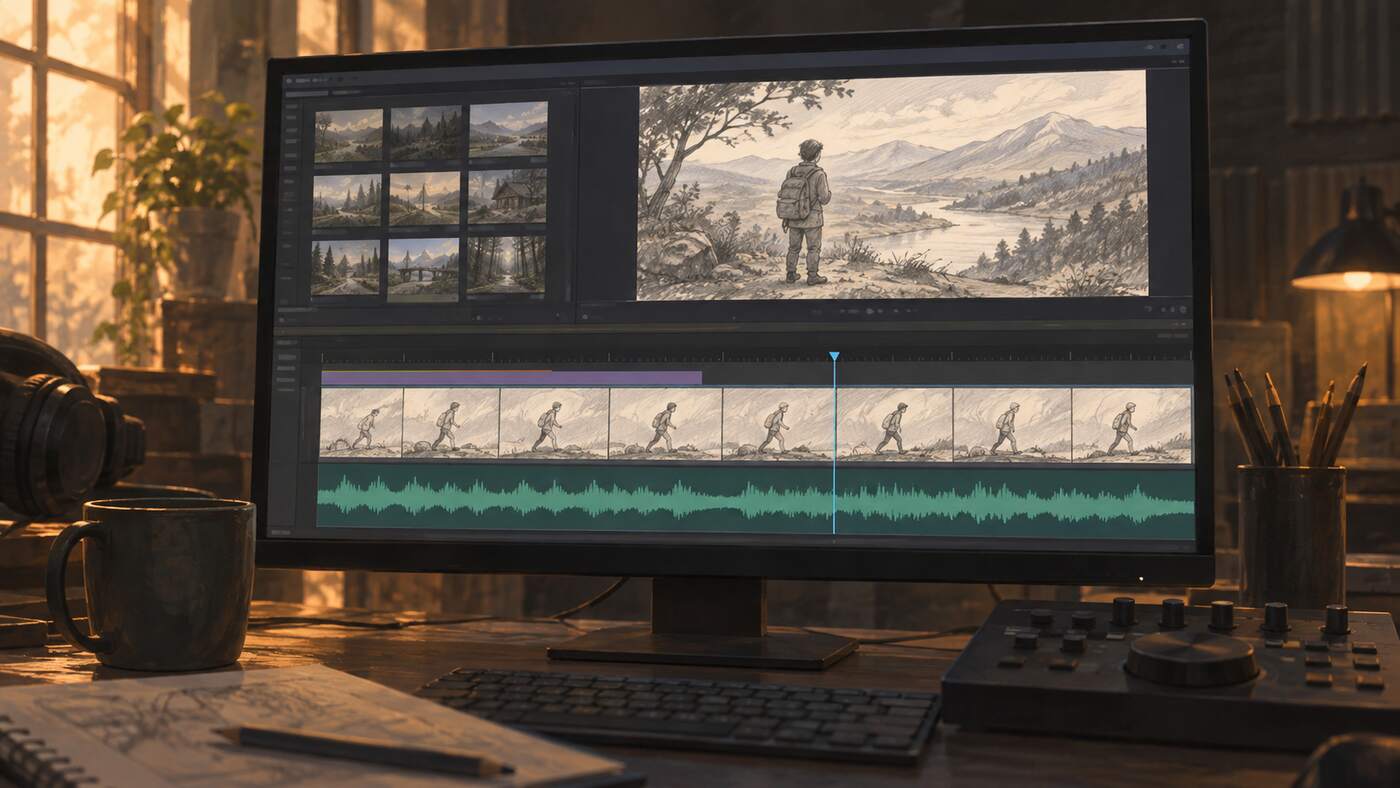
- An animatic is, in Wikipedia’s words, a set of storyboard stills synchronised with a rough soundtrack, so the team can judge timing.
- Previs, short for previsualization, is the wider planning stage that can include storyboards, animatics and rough 3D blocking, as Rokoko’s guide to previs explains.
Where did storyboards come from?
Storyboarding as we know it was developed at Walt Disney Productions in the early 1930s. According to Wikipedia, Disney story artist Webb Smith is credited with the idea of drawing scenes on separate sheets of paper and pinning them to a bulletin board to tell a story in sequence. The first complete storyboards were made for the 1933 Disney short Three Little Pigs.
The method spread quickly. Wikipedia says that by 1937 to 1938 all American animation studios were using storyboards. Live-action film followed: Gone with the Wind (1939) was one of the first live-action films to be completely storyboarded, with production designer William Cameron Menzies planning shots in detail.
From pinboard to screen: the storyboard process
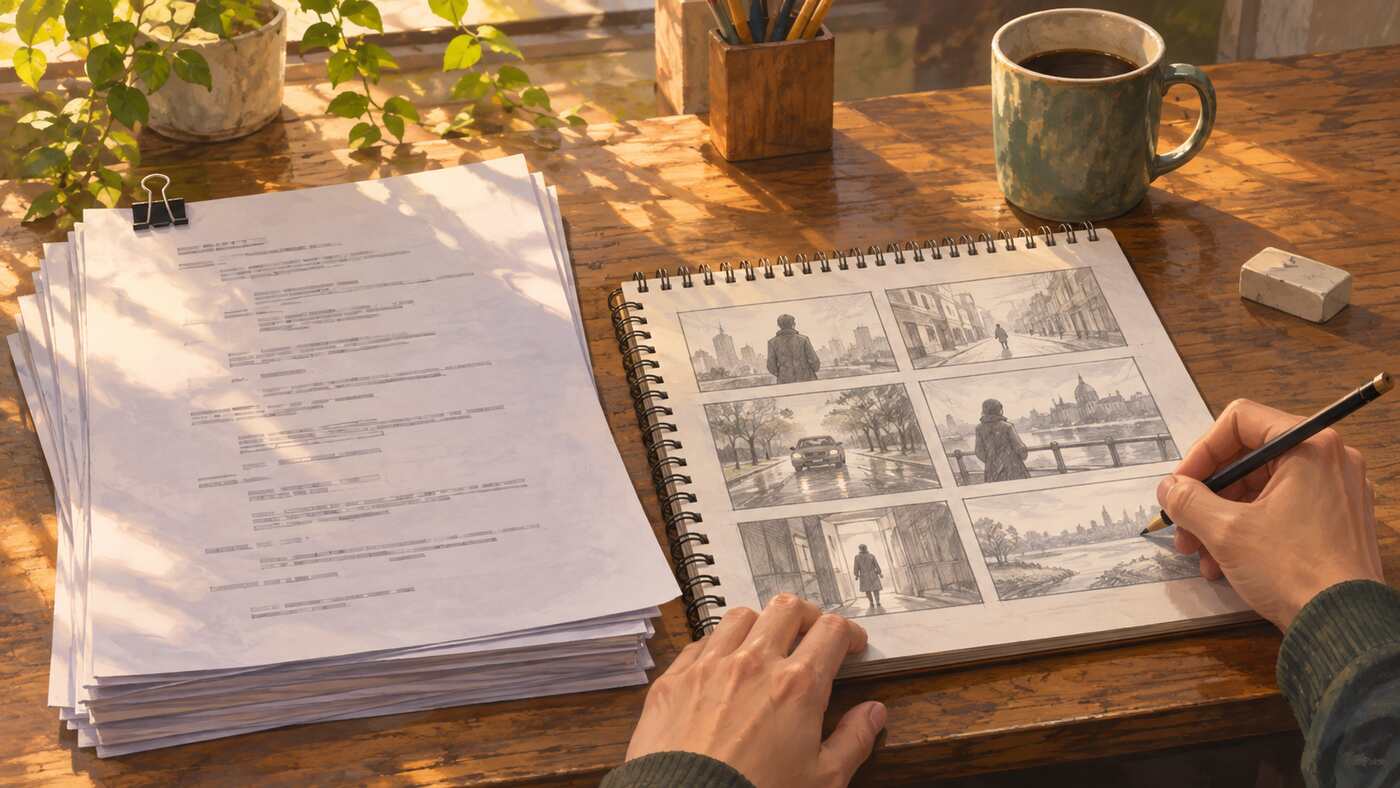
The order of work varies by studio, but the stages described in the sources follow a common path:
- Read the script or brief and mark the beats of the action.
- Draw rough thumbnails to test camera angles and staging.
- Draw clean panels with action, dialogue and camera notes.
- Review the boards with the director or client and revise.
- Cut the panels into an animatic against rough sound to check timing.
- Hand the approved boards and animatic to layout, animation or the live shoot.
Why make an animatic, and what is previs?
Drawings on a wall cannot show how long a moment lasts. An animatic can. Wikipedia notes that an animatic gives a sense of how a sequence will flow, and that advertising agencies use animatics and photomatics to test commercials before they are fully made. In animation, where every second of finished footage is expensive, finding a slow scene at animatic stage saves real work later.
The same thinking runs through previs for games and effects. The StoryboardArt previs tutorial describes previs as a way to plan complex shots and sequences before production, building on the storyboard.
Storyboards in games, trailers and adverts
Games use storyboards for cut-scenes and trailers in much the same way films do. Tui Studios’ storyboard page on the Wayback Machine lists boards for L.A. Noire, the Rockstar Games and Team Bondi crime game set in 1947 Los Angeles. Ten of those L.A. Noire boards appeared online in 2009, reported by Engadget and VG247. Our article on the L.A. Noire storyboards covers that story.
The same archived page lists storyboards for game trailers made by the Australian studio Plastic Wax, including Rift and Transformers, and boards for a Ghostbusters Wii television commercial for Atari. Trion Worlds’ Rift CGI trailer was published by IGN in January 2011.
Storyboards for film and pitches
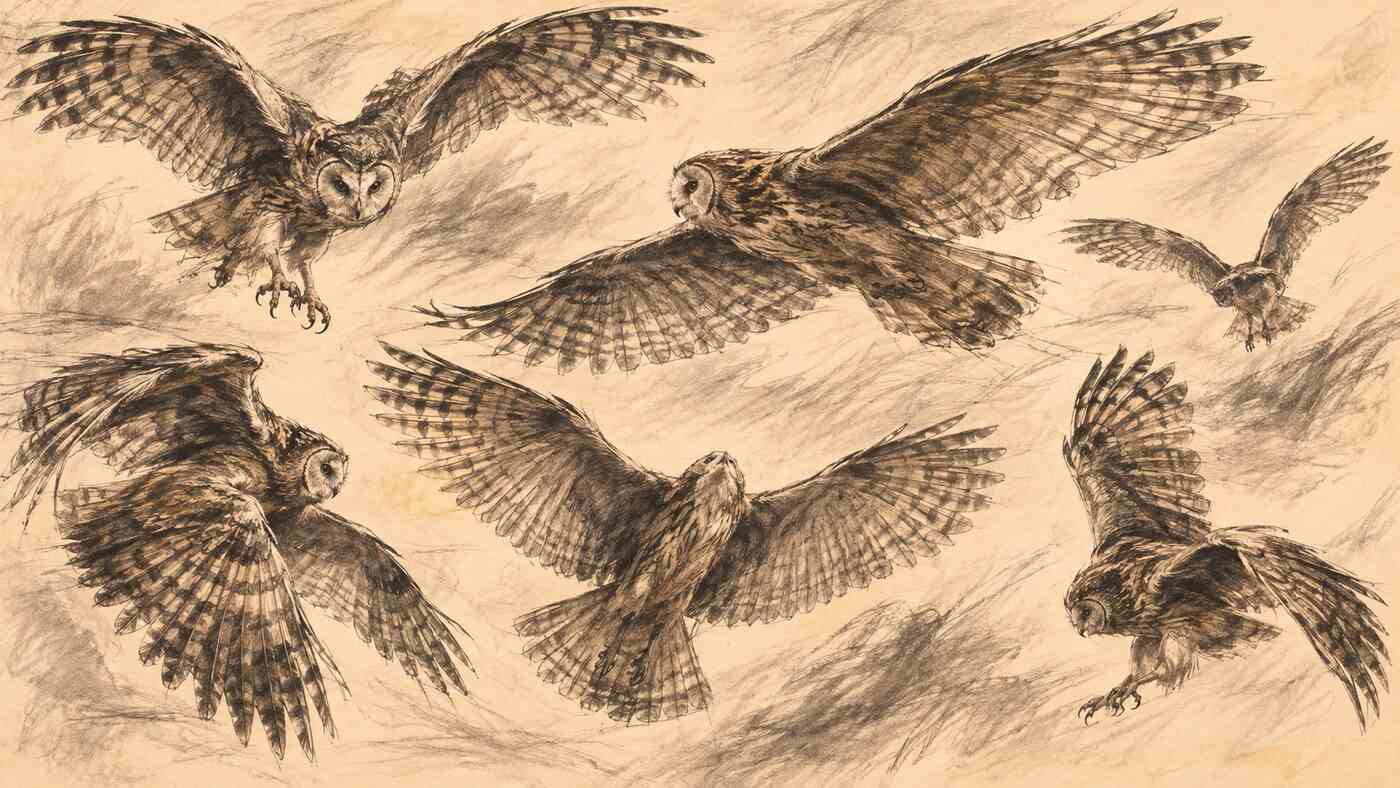
Tui’s archived portfolio also lists storyboard work for Animal Logic on Legend of the Guardians: The Owls of Ga’Hoole. Wikipedia’s Animal Logic article describes it as Australia’s first 3D animated feature, released on 24 September 2010. Directed by Zack Snyder and based on Kathryn Lasky’s books, it took about $140 million at the box office according to Wikipedia. Animal Logic says the film took three years and more than 500 staff.
Not every board becomes a finished film. Tui’s portfolio included unused pitch boards for a Kia advert and for a Riddick project. Pitch boards are drawn to win a job or sell an idea, so many never go further. The studio also listed boards for Heartburn, for the agencies CJB and FSM, and for Mary the Braveheart, for the Sydney Children’s Hospital Foundation.
Storyboard types at a glance
| Type | Purpose | Example from Tui’s portfolio |
|---|---|---|
| Game cinematic boards | Plan cut-scenes inside a game | L.A. Noire |
| Trailer boards | Plan a CG trailer before animation | Rift, Transformers (Plastic Wax) |
| Commercial boards | Plan a TV advert for client approval | Ghostbusters Wii TVC |
| Feature film boards | Plan sequences in an animated film | Legend of the Guardians |
| Pitch boards | Sell an idea before a job is won | Kia, Riddick (unused) |

Learning more about storyboards
Storyboarding remained a hand skill for most of its history, drawn with pencil and marker on paper and pinned to a wall, as Webb Smith did at Disney. Tui’s founders came to it from hand-drawn animation at DisneyToon Studios Australia, which our article on Walt Disney Animation Australia describes. The studio’s own app, Monster Melody Mash, shows the other side of its work: finished animation.
Key takeaways
- A storyboard is a sequence of drawings that pre-visualizes a film, animation, advert or game scene.
- The method was developed at Disney in the early 1930s, with Three Little Pigs (1933) the first fully storyboarded short.
- Animatics time storyboard stills to sound; previs extends planning into rough 3D.
- Tui Studios boarded L.A. Noire, game trailers, adverts and Legend of the Guardians.
- Pitch boards are drawn to win work, and many are never produced.
Common questions
What is the purpose of a storyboard?
A storyboard lets a team see a film, advert or scene before it is made. Each panel shows a shot, so directors, clients and animators can agree on staging, camera angles and story order early, when changes cost only a new drawing rather than new footage or animation.
Who invented the storyboard?
Wikipedia credits Disney story artist Webb Smith with drawing scenes on separate sheets and pinning them to a board in the early 1930s. The first complete storyboards were made for Disney’s Three Little Pigs in 1933, and by 1937 to 1938 all American animation studios used them.
What is the difference between a storyboard and an animatic?
A storyboard is a set of still drawings. An animatic places those drawings on a timeline against a rough soundtrack, so each shot lasts as long as it will in the finished piece. Advertising agencies use animatics to test commercials before production.
Did Tui Studios storyboard L.A. Noire?
Yes. Tui Studios listed L.A. Noire among its storyboard projects on its archived website, and leaked L.A. Noire storyboards appeared online in 2009. Team Bondi in Sydney developed the game, which Rockstar Games published in 2011.
How we put this together: the history and definitions come from Wikipedia’s storyboard article and previs guides from Rokoko and StoryboardArt. Tui Studios’ projects come from its storyboard portfolio page as archived by the Wayback Machine. Film details come from Wikipedia and Animal Logic. Leak reports come from Engadget and VG247.
Sources
- Wikipedia: Storyboard
- Rokoko: Previs, what is previsualization
- StoryboardArt: Previs
- Tui Studios storyboards page, Wayback Machine
- Engadget: Ten L.A. Noire storyboards leaked online, 2009
- VG247: L.A. Noire storyboards are leaked
- Wikipedia: Animal Logic
- Wikipedia: Legend of the Guardians
- Animal Logic: Legend of the Guardians
- IGN: Rift CGI trailer